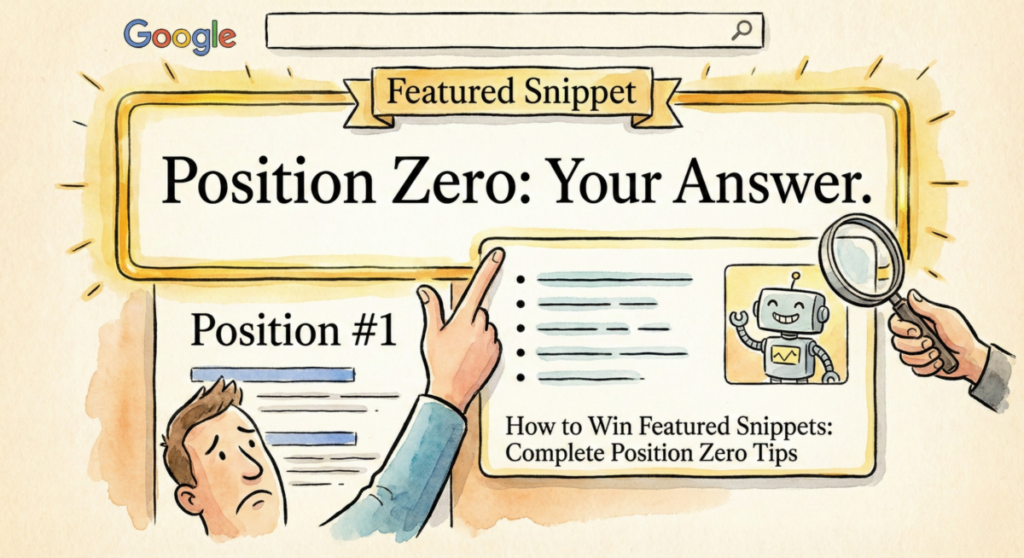
In the competitive world of digital marketing, getting a featured snippet (Position Zero) on Google can significantly increase your website’s visibility, traffic, and authority. These results are often presented above or on top of standard search result listings, making it easier for users to find a short and direct answer to what they are searching for. Positioning in this valuable place not only improves click-through rates, it also establishes your brand as a reliable information source.
In this guide, you will learn what featured snippets are, their significance and importance in search results, get insights on how Google chooses them along with a step-by-step strategy to optimize your content to claim Position Zero.
What Are Featured Snippets?
A featured snippet is a distinctive type of search result that shows a summary of information pulled from a webpage at the top of Google’s results. Unlike the standard organic listings that we are all familiar with, featured snippets serve to return fast, direct answers to a user’s query without them having to click through to a website.
Types of Featured Snippets
In order to create content optimized for each of the snippets, you should understand the different types:
Paragraph Snippets
Usually show up for “what,” “why” and “how” questions.
Often snipped from the first few sentences of a well structured paragraph, they’ll give a short written answer, 40–60 words or so.
Example: Searching “What is SEO?” for example, shows a brief Wikipedia paragraph on SEO.
List Snippets
Ordered (numbered) for step by step, or unordered (bulleted) for non-sequential lists like benefits or features.
For example, a search for the query “Steps to start a blog” might produce a result with aspects of the numbered list of steps itself inside in the snippet.
Table Snippets
Designed to convey structured data e.g. comparisons, statistics or pricing usage.
For example, the query “top smartphones 2026” might produce a table containing smartphone models along with their specs and prices.
Video Snippets (emerging trend)
These snippets often show a thumbnail of the video, sometimes at its most relevant timestamp.
As an example, typing in “how to tie a tie” might result in YouTube video of someone doing all the steps.
Why Featured Snippets Matter
Here’s why these are so crucial:
Increased Visibility
To rank at the very top of Google search results guarantees that your content will be seen first before even the first organic result.
Higher Click-Through Rates (CTR)
Sites that are featured in Position Zero typically get more clicks, as users view them as the most authoritative and relevant.
Brand Authority and Credibility
When Google conveys that your content is featured, it means that your site is trusted. This can merely affect the user experience and improve conversions.
Voice Search Optimization
A lot of voice assistants get answers straight from featured snippets. You have to optimize for voice in order to send your competitors packing, you want to be the default answer.
Enhanced User Experience
Since a snippet is a clear, quick answer to the user’s query with less search effort needed to find it, overall satisfaction increases.
According to studies, content that appears in featured snippets can deliver a CTR boost of up to 30%, depending on the query and specific industry.
How Google Selects Featured Snippets
Google does not select snippets at random; the algorithm weighs several measures:
High-Quality Content
It also means content should be accurate, authoritative, and complete. Pages that show expertise and trustworthiness receive higher ranking from Google.
Clear Structure
Using headings (H1, H2, H3), lists, tables and short paragraphs so that Google can efficiently parse content.
Direct Answers
Brief text that addresses a question, about 40–60 words average, is more likely to get featured.
Semantic Relevance
You should use the data till October 2023. Google assesses if your response actually fulfills the user’s search intent — not just those keywords.
Existing Ranking
Pages already appearing in the top 10 search results are more frequently chosen for snippets than others. That means that the higher you rank, the more relevant/authoritative your page is deemed.
User Engagement Signals (indirect factor)
Pages with better CTR and lower bounce rates, dwell time have a more significant chance to be featured as Featured Pages over time.
How to Rank in Position Zero
In order to earn this special spot, you need more than just good content — you need optimized content. Here’s a step-by-step guide:
1. Identify Featured Snippet Opportunities
- The first step is identifying keywords and queries that already pull featured snippets in your niche.
- Identify those snippet opportunities using an SEO tool like Ahrefs, SEMRush or Moz.
- Research question based (who, what, why and how and vs best).
- Focus on keywords that already rank for you in position one of the first page, as they can become snippets with a high probability.
Pro Tip:
Semrush has a filter for finding “near-miss” queries — keywords where your page ranks 2–5. It is easier to optimize for Position Zero than starting from here.
2. Optimize Content Structure
Google rewards content that is easy to parse. Use a logical hierarchy:
Headings (H2/H3): Explain what you write in a question or clear phrase. For instance, “20 Ways to Improve business with SEO service in maryland 2026.”
Subheadings: Used to segment the information & improve readability
Bullet points and numbered lists: Great for list-based snippets.
Tables: Structure comparisons or statistical data for table snippets.
This will help not only Google but keeps users engaged, increasing the chance of clicks and shares.
3. Provide Concise, Direct Answers
Google prefers short, clear, and immediately useful answers:
- Keep paragraphs 40–60 words.
- Follow immediately after the question header with the answer.
- Avoid fluff and filler—be precise.
Example:
Q: What is a snippet that has been featured?
A: A featured snippet is a brief summary of a webpage’s content that appears at the top of Google search results to provide an answer to someone’s query instantly.
4. Use Schema Markup
Schema markup is a form of structured data that allows search engines to comprehend content better.
Include FAQ Schema or how-to schema on pertinent segments. This makes it more likely for your content to be pulled as a rich snippet by Google. Rich snippets increase CTR with extra media or structured items.
Read Also : Keyword Placement Guide: How to Use Keywords the Right Way
5. Focus on On-Page SEO
On-page optimization is what helps Google understand your content:
Include the target keyword in:
- Title tag
- Meta description
- Headings
Pro Tips:
- Use LSI (Latent Semantic Indexing) keywords to cover related search queries and boost topical relevance.
- Don’t do keyword stuffing; just use relevant keywords naturally.
6. Improve Content Authority
Google prefers content from reliable and credible sources:
- Use credible references and always link to reputable websites.
- Continuously revise content with the most recent info to ensure its relevance.
- Focus on backlinks to boost your domain authority.
Authority is key: Even great content may not get Position Zero if Google doesn’t trust the site.
7. Optimize for Voice Search
Voice searches are constantly on the rise, particularly in mobile devices:
- It is important to try varying pitch and pace in different sentence constructions.
- Provide clear answers to questions in short, direct sentences.
- Use long-tail keywords and common voice search phrases, such as, “how do I,” “what is the best” or “steps to.”
This helps to voice search optimization and gives you more chances of getting your content read aloud from assistants such as Google Assistant, Siri, or Alexa.
8. Monitor & Update Performance
Extracting Featured snippets is a cycle of continuous optimization:
- You can monitor snippet performance, impressions, and clicks using Google Search Console.
- Understand which content gets and loses Position Zero over time.
- Change headings, re-list items, or modify answers based on performance.
Such constant enhancement helps your content stay in contention with search results.
Common Mistakes to Avoid
To secure Position Zero, there are some common pitfalls to avoid:
Stuffing:
Using too many keywords harms readability and appearance in a snippet.
Neglecting Mobile Users:
The majority of searches happen on mobile. New headers only make sense if they’re easy to read on small screens.
Bad Formatting:
Lack of paragraph structure, headers or bullet points also makes it less likely to be a featured snippet.
Not Enough Details:
Generic or incomplete answers rarely make the cut. Be very precise and be able to give actionable things.
Ignoring Updates:
An old content loses its relevance and authority and hence loses its snippet eligibility.
Conclusion
One of the most effective SEO tools for increasing visibility, CTR and authority are featured snippets. By familiarizing yourself with the different snippet types, optimizing your content structure, providing precise answers in concise language riddled with keywords, utilizing schema markup, and maintaining authority within your content you can improve your odds of snagging Position Zero quite considerably.
And note that appearing in Position Zero is not necessarily about clicks, but about being prioritized and recognized as a trusted and authoritative source by Google. Regular monitoring, updates, and alignment with SEO best practices will ensure that you can continue to stay on top and be a dominant player in the search realm.
FAQs
1. What is a featured snippet in Google search?
A featured snippet is a summarized answer displayed at the top of Google search results in response to a user’s query. It provides concise information without requiring the user to click through to a website. Featured snippets can be in paragraph, list, table, or video format.
2. Why is ranking in Position Zero important for SEO?
Position Zero improves visibility, increases click-through rates, and establishes authority. Being featured signals to users that your content is trusted and relevant, often outperforming traditional first-page results in attracting traffic.
3. How does Google choose content for featured snippets?
Google selects content based on quality, relevance, and structure. Pages that are already in the top 10 search results, provide clear answers, use organized headings, and match user intent are more likely to appear as featured snippets.
4. What types of content work best for featured snippets?
Content that directly answers questions works best. Paragraphs for definitions, lists for step-by-step instructions, tables for comparisons or statistics, and videos for tutorials are highly effective. Using structured data like FAQ or How-To schema further improves chances.
5. Can any website achieve a featured snippet?
Yes, any website can potentially earn a featured snippet if it provides high-quality, concise, and well-structured answers to relevant search queries. Optimizing content, using proper headings, and targeting question-based keywords increase your likelihood of success.