Search is being remade in one of the largest upheavals since Google was born. The evolving landscape of search is witnessing the rise of AI Search Optimization (AISO), as Traditional Search Engine Optimization (SEO) — previously dictated by keywords, backlinks, and ranks — takes a back seat to artificial intelligence. As the landscape transforms, with AI-infused search assistants, chatty interfaces and generative engines emerging, marketers need to reconsider how they think about visibility, authority and their content strategy.
This is not purely a technical shift—it more fundamentally alters how users discover information and brands that gain attention. In this article, we will look at the difference between Artificial Intelligence Search Optimization and traditional SEO. Our examination will cover why it matters, as well as how marketers can adjust to remain competitive given the onslaught of “AI” in recent months.
What Is Traditional SEO?
Traditional SEO is the traditional practice of optimizing websites so as to achieve higher rankings in search engines results pages (SERPs). Its core principles include:
- Keyword research and targeting
- On-page SEO (title tags, meta descriptions, and headings)
- Technical SEO (indexing, mobile-friendliness, page speed)
- Backlink building
- Content relevance and authority
To rank among the top links in the search results when users look for a specific query. Such rankings are a way to measure success (along with organic traffic, click through rates, conversions etc).
This was effective for years because search engines primarily used algorithms to score pages according to signals like keywords and backlinks.
What Is AI Search Optimization?
AI Search Optimization (AISO) is the practice of ensuring that content can be discovered, interpreted, and referenced by AI-oriented search systems. These systems include:
- Conversational AI assistants
- Generative search engines
- Voice search platforms
- AI-powered answer engines
Unlike traditional search engines, which present a list of links to users, these platforms provide direct answers or summaries and recommendations. In many instances users click directly through to a website.
Also focuses on:
- Clearly and concisely answering questions in an authoritative structure
- Now you are improving with AI-generated responses
- Focusing on topical Authority instead of Keywords
- Focusing on conversational and intent-based queries
Important Differences Between SEO and AI Search Optimization
Search Results Format
Traditional SEO:
The result shows a list of related links in order. Users select what site to visit.
AI Search Optimization:
Provides direct answers, summaries or synthesized responses. The AI might stitch information from various sources together into a single answer.
Impact:
Visibility is no longer just about being #1 — it’s also about ranking in the AI’s answer.
Keyword vs Intent Focus
Traditional SEO:
Based largely on keywords, exact-match phrases and search volume.
AI Search Optimization:
Natural language, user intent and context-focused Inevitably, queries are more conversational (e.g.
- “How to do small business marketing the right way in 2026?”
- “How do I make my website show up without ads?
Impact:
They must stop stuffing keywords into their content and start “talking” in a natural, human format that answers real questions.
Content Structure and Clarity
Traditional SEO:
Content is often optimized for crawlers — heading tags, keywords, formatting denoting relevance.
AI Search Optimization:
The data that the AI models learn on must be readable and easily extractable. This means:
- Clear answers to specific questions
- Concise explanations
- Logical structure
- Use of FAQs and summaries
Impact:
The better-your-content, the more likely you are to be included in something that AI is generating.
Role of Backlinks
Traditional SEO:
The backlinks are one of the top ranking factors. The more high-quality links that point to your site, the higher your authority.
AI Search Optimization:
Backlinks are still important but less visible directly AI systems prioritize:
- Content credibility
- Brand authority
- Consistency across sources
Impact:
You can no longer have authority based on mere link quantity.
Traffic vs Visibility
Traditional SEO:
Clicks and traffic are the metrics of success.
AI Search Optimization:
Clicks may not always follow with success. Instead, it focuses on:
- Brand mentions in AI responses
- Being cited as a source
- Redirecting user choices to your website without physical visits
Impact:
Marketers need to revisit KPIs beyond traffic—visibility and influence are more valuable.
User Interaction
Traditional SEO:
Users enter short queries and skim results.
AI Search Optimization:
Users carry on conversations, ask follow-up questions, and demand customized responses.
Impact:
But content also needs to anticipate additional questions and offer richer context.
Read Also : The Complete Guide to B2B SaaS Content Writing That Converts
Why You Should Care About AI Search Optimization Now
AI-filtered search is not something for the future. Users are increasingly turning to AI tools to:
- Find instant answers without scrolling through many websites
- Compare products and services
- Simplifying difficult subjects into something simple to comprehend
This dynamic diminishes dependence on conventional search results and alters traffic patterns around the internet.
For marketers, this means:
- Fewer clicks from traditional rankings
- More competition for the attention of AI-generated responses
- Greater emphasis on brand authority and trust
Neglecting AISO can lead to a loss of visibility—even if your SEO ranks are still holding up.
How Marketers Can Adapt
Focus on Answer-First Content
Don’t write content that leads you up to an answer—lead with the answer. Give clear, direct answers early on in your content.
Example:
- Comment on the sentence and comment on the second one.
- Follow with detailed insights
This makes AI systems more likely to include you in their results.
Build Topical Authority
Instead of focusing or,” create “groups” around a central topic.
Example:
If your niche is digital marketing, you can make a cover:
- SEO basics
- AI in marketing
- Content strategies
- Analytics and performance
This is a sign of expertise and increases your chances to be cited.
Optimize for Conversational Queries
Consider how humans naturally ask questions. Use:
- Long-tail keywords
- Question-based headings
- Natural language
Incorporate phrases like:
- “How do I…”
- “What is the best way to…”
- “Why does…”
Use Structured Data and Formatting
Attack your formatting so that it is easy for search engines and AI systems to parse:
- Use headings (H1, H2, H3)
- Add bullet points and lists
- Include FAQs
- Use schema markup where possible
Clear formatting improves content extraction.
Strengthen Brand Authority
AI systems tend to favor trusted sources. Build your authority by:
- Publishing high-quality, original content
- Gaining mentions on reputable websites
- Showcasing expertise (author bios, credentials)
- Maintaining consistency across platforms
Monitor New Metrics
Ranking and traffic are insufficient as metrics anymore. Track:
- Brand mentions in AI responses
- Engagement and retention
- Conversion rates from AI-driven interactions
Tools will continue to evolve, but awareness of these changes is important.
Create Multi-Format Content
Most AI systems are trained on different types of content, such as:
- Blog posts
- Videos
- Infographics
- Podcasts
The more ways you make your content available to readers, the higher your chances of being found and cited.
Challenges of AI Search Optimization
There are opportunities but challenges, too: AISO questions
Reduced Website Traffic
Users receive the answers and don’t click through, so there are fewer visits.
Attribution Issues
And it can be hard to monitor if your content was behind an A.I.-generated response.
Increased Competition
More brands are scaling quickly, making authority more difficult to show.
Dependence on AI Platforms
Visibility may be a function of how AI systems select and prioritize sources.
The Future: Coexistence, Not Replacement
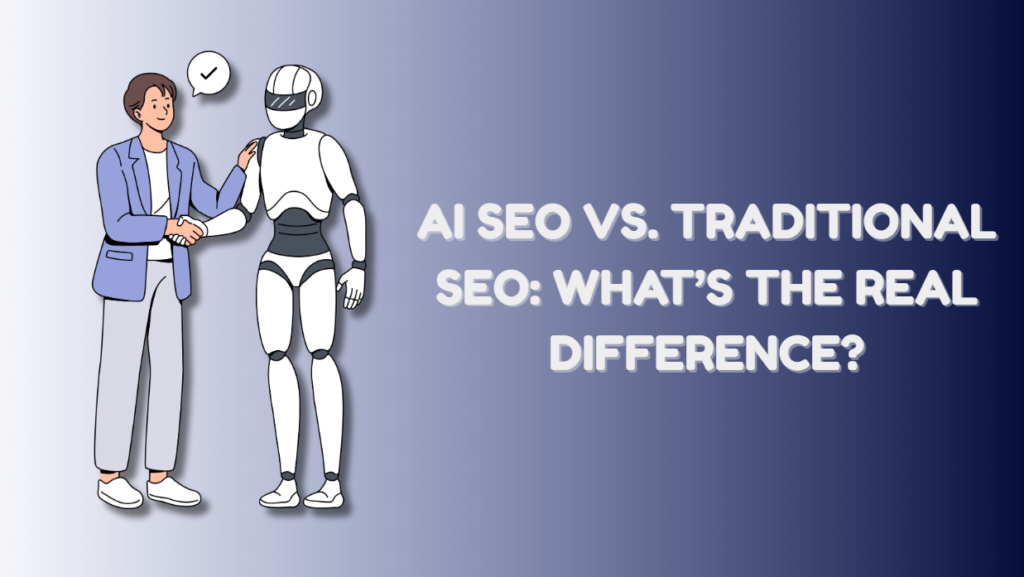
It is crucial to note that AI search optimization does not replace traditional SEO; it only enhances it.
Traditional SEO still matters for:
- Indexing and discoverability
- Website performance
- Foundational visibility
So AI search optimization is the layering on top of this foundational data by concentrating on:
- Content usability
- Authority
- Context and intent
The most effective marketers will not take one approach over the other, they will combine the two.
Conclusion
Picktech Innovations The transition from standard SEO to AI Search Optimization is a paradigm shift, changing how humans discover and consume information. Whereas traditional SEO aims for ranks and clicks, AISO caters to answers, authority and influence.
The way forward for marketers is obvious:
- Write good content that is structured and intent-based
- Be on the lookout for demonstrating trust and competence
- Fit into conversational and AI-powered search behavior
Those that do Get with the Times early will remain visible, gaining a leg up against the competition in this fast-changing digital ecosystem.
Ultimately, the objective is unchanged: to match users with information of value. The difference is in the way that connection is made — and AI is changing it.