In the wired world of today’s connected economy, businesses use online channels to communicate with their customers, create strong brands and, ultimately, increase sales. Two buzzwords that frequently appear in marketing are digital marketing and social media marketing. Though they are similar, they’re not the exact same. Knowing the distinction, the strength and when to use each is important for effective marketing strategies.
In this post, we share a thorough comparison of digital marketing vs social media marketing so you can better understand each and whether or not to apply them together for the highest possible ROI.
What Is Digital Marketing?
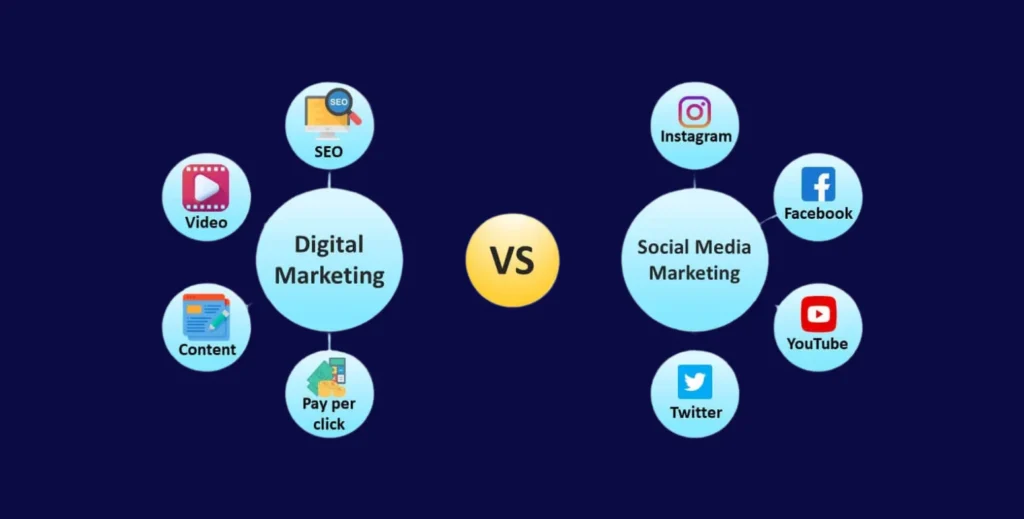
Digital marketing is such a wide term that covers all marketing channels and methods you can think of. Its first mission is to engage the audience through the internet, wireless and digital mediums.
Digital marketing includes many methods, for example:
- Search engine optimization (SEO)
- Search engine marketing (paid ads)
- Email marketing
- Content marketing
- Affiliate marketing
- Display advertising
- Mobile marketing
- Social media marketing
The scope of digital marketing is broad and it covers the full customer journey from awareness to consideration, conversion and retention.
What Is Social Media Marketing?
Social media marketing is a unique subcategory of digital marketing that promotes business growth through the use of social networking websites. It is about building content, engaging audiences, running ads, and developing communities on Facebook, Instagram, and LinkedIn, to whatever comes next — namely X or TikTok or beyond.
Here are four key goals of social media marketing:
- Brand awareness and visibility
- Audience engagement and interaction
- Community building
- Lead generation and conversions
- Brand loyalty and advocacy
Social media marketing is more oriented toward building relationships and enabling real-time conversations.
Digital Marketing with Social Media marketing
Another reason digital marketing is so great is that it reaches tens of thousands more people than you might offline due to the range and engagement it provides. It enables businesses to interact with users via search engines, websites, e-mails and mobile apps as well as through paid advertising providers.
Social media marketing is narrower in reach but deeper in engagement. It does this by bringing brands to the forefront where their audiences frequent and spend a lot of time engaging, sharing content, and casting judgment.
In simple terms:
- The net of digital marketing is cast far and wide over the web.
- Social media marketing is very specific to platforms and communities.
- Audience Targeting and Intent
- One of the larger distinctions is why an audience would see it.
Digital marketing platforms such as SEO and paid search focus on individuals that are actively searching for answers. These are often highly intent-based users very close to making a decision.
Social media advertising targets users according to interests, behavior and demographics, not intent in the moment. Users may not be searching for a product but can still be hit up with great content and even better ads.Head of both options is strong but can be great when matched with the right objective.
Read Also : Social Network Marketing Jobs Explained: Skills, Salaries, and Growth
Content Style and Messaging
It’s not like digital marketing content is the narrative, immersive kind. Examples include blog posts, landing pages, newsletters and product pages.
Content for social media marketing is customarily more conversational, more visual, and more interactive. It contains short-form videos, pictures, stories, polls and user-generated content.
Key differences:
- Marketing is all about being clear, being deep and SEO friendly.
- Social media marketing puts creativity, emotion and an engaging conversation first.
Advertising Capabilities
Both digital media and social media provide paid advertising options, but these are executed differently.
Digital advertising includes:
- Search engine ads
- Display ads
- Retargeting campaigns
- Native advertising
Social media advertising focuses on:
- Platform-specific ad formats
- Interest and behavior-based targeting
- Visual and video-driven campaigns
Social-media ads are frequently good at such awareness and engagement, but search-based digital ads can be great at capturing demand.
Analytics and Performance Tracking
In digital marketing, what works is everything that can be measured—traffic, conversions, bounce rates and ROI! These statistics are simple, and this enables determining if the user actions actually drive sales.
The social media marketing stats actually are more about the following:
- Engagement rates
- Reach and impressions
- Follower growth
- Social shares and comments
Although social metrics may seem further removed from conversion-driven, they are essential pieces of building brand and customer affinity.
Cost and Return on Investment
Digital marketing tactics such as SEO and email marketing can produce long-term benefits while costing less over time. Once set up, they can become sources of steady traffic and leads in the long term.
The downside to social media marketing is that in order to keep your content visible, you may have to constantly pump money into creating new ads. On the other hand, it’s probably ad-blindness-inducing if not done right—but can bring extreme brand exposure and customer loyalty.
The ROI is based on:
- Business goals
- Industry competition
- Strategy execution
- Audience behavior
Customer Journey and Relationship Building
Digital marketing nourishes the whole customer journey, from prospecting to sales and even more. It centers around lead nurturing and conversions as well as retention.
This is where social media marketing really shines. It creates a space for brands to interact with their clients, collect input, and form lasting relationships.
Combined, they offer a strong total package catering to both acquisition and retention.
What’s Best for Your Business?
There is no universal answer. It all comes down to business goals, resources and target audience.
Digital marketing is ideal for:
- Companies specializing in lead generation and sales
- Long-term growth strategies
- High-intent search traffic
Social media marketing is best for:
- Brand awareness and visibility
- Audience engagement and community building
- Visual storytelling and promotions
Most successful businesses combine both strategies.
Social media marketing augments digital marketing by boosting traffic, enhancing content, and improving trust. And digital marketing helps social media support by covering demand generation: capturing demand, nurturing leads and converting interest into sales. But when implemented carefully, they combine to form an integrated marketing platform that works.
Conclusion
Social media marketing and digital marketing are not rivals; they are tactics that can both serve very different purposes. Digital marketing has its breadth, structure, and conversion-focused tactics, while social media marketing provides engagement, personality and relationships.
Knowing the differences means businesses can focus their resources meaningfully and develop holistic campaigns that feed sustainable growth. The key is to use both in such a manner that brands focus on using it to reach the intended consumers and deliver ads with substance that will result in continued success on the digital landscape.