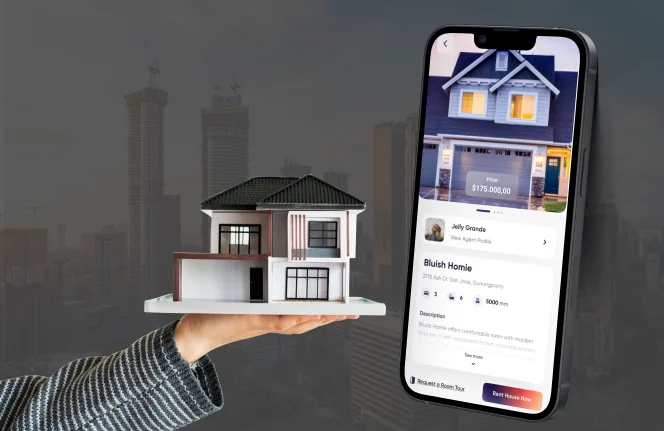
Over the past ten years, the real estate industry has experienced a radical digital transformation. But buyers, sellers, investors and agents now expect instant access to listings, virtual tours, pricing data and communication tools — all from their smartphones. With a prerequisite of customers spending more time on their mobile devices than the web, app development quickly emerged as a powerful strategic investment for real estate companies.
From enhancing customer engagement to streamlining internal processes, mobile applications provide tangible benefits throughout the entire real estate lifecycle. Here is a detailed insight into benefits of real estate app development.
Enhanced Property Search Experience
Seamless Property Search is One of the Major Benefits of Real Estate App Development They want e-browsing to be fast, intuitive and tailored. A mobile app with a great UX let users:
- Properties must be grouped by location, size and amenities.
- See high-res images and video walkthroughs
- Explore interactive maps
- Save favorite listings
- Receive alerts for new properties
Mobile apps are designed specifically to load faster and run smoothly compared to regular websites. Geolocation features allow users to see all nearby properties in real time, enhancing convenience and engagement.
The property search experience is tailored to individual users, leading to higher user engagement and dramatically improved lead generation for real estate companies.
Improved Customer Engagement and Communication
There is constant communication between buyers, sellers, and agents when dealing with a real estate transaction. Mobile apps allow for instant, centralized communication.
Features such as:
- In-app messaging
- Push notifications
- Appointment scheduling
- Document sharing
- Live chat support
Assist with streamlining interactions and minimizing delays.
Push notifications are particularly valuable. They enable agents to alert clients in real time about new listings, price reductions, open houses or offer updates. And, with that immediacy comes a greater chance of converting someone and building rapport with clients.
It gets rid of dependency on third-party platforms by establishing a direct channel of interaction through an app.
Use of Virtual Tours and Augmented Reality
Currently, modern applications development supports cutting-edge technology systems — advanced augmented reality (AR) and 3D based virtual tours. These features enable prospective buyers to explore a property remotely without planning physical visits.
With virtual walkthroughs, they are very effective in providing immersive experiences when it comes to visualizing the space to plan out layout and utilize design details optimally. This is especially beneficial for:
- Out-of-town buyers
- International investors
- Luxury property clients
- Busy professionals
AR features will enable consumers to place virtual furniture in a room or change up interior styles digitally. Such tools build confidence in buyers and expedite decision timelines.
Real estate companies sets themselves apart in highly competitive marketplaces by providing innovative viewing experiences.
Higher Lead Generation and Conversion Rate
A real estate app is a robust lead generation engine. Companies can monitor user behavior, browse patterns and property preferences with built-in analytics & tracking tools.
Features such as:
- Instant inquiry forms
- Mortgage calculators
- Automated follow-up notifications
- Saved search alerts
PR and well-done advertising to a new audience will encourage users to interact further with listings.
The simpler the process is for users to ask a question or book a viewing, the more likely they are to convert. They minimize customer journey friction, resulting in better closing rates.
Apps can also integrate with CRM systems, enabling agents to manage leads in a streamlined manner and develop prospects using automated workflows.
Brand Visibility and Competitive Advantage
So, why branding is important in real estate? The presence of a mobile app makes a business convenient, up-to-date with technology helps businesses look more professional and customer focused.
An icon on a smartphone provides constant brand reminders to users. Their constant presence enhances brand recall and encourages repeat engagement.
Companies that invest in app development show technology leadership. This is especially powerful in high-value markets where clients demand premium service and innovation.
Distinction via digital convenience usually represents a strong competitive advantage for firms.
Data-Driven Decision Making
Data generated from real estate apps can also support strategic decision-making processes. Market demand is reflected in user activity, search trends, geographic interest and engagement metrics. Companies can:
- Analyze app data
- Identify high-demand neighborhoods
- Understand price sensitivity
- Optimize marketing campaigns
- Predict buyer preferences
Using data to guide decisions enables businesses to invest resources wisely and adjust listing approaches accordingly.
And rather than traditional market research inventory signals, firms can examine real-time user behavior to help guide growth plans.
Read Also : 12 Best Web Design Companies in 2026
Streamlined Internal Operations
The value of app development extends to in-house teams as well, beyond clients. These custom real estate apps can help automate admin tasks, including:
- Document management
- Digital contract signing
- Agent performance tracking
- Property management updates
- Maintenance request handling
If you are a property management firm, your tenants can log service requests directly from the clean and easy-to-use app.
Automation of repetitive tasks and centralized data leads to better operational efficiency and lower overhead costs for real estate companies.
Secure Transactions and Digital Documentation
Real estate transactions often involve sensitive financial and personal information, making security critical. An app that is designed and developed professionally takes into account high-level security functions like:
- Encrypted communications
- Secure payment gateways
- Digital signature integration
- Two-factor authentication
Digital documentation removes the delays created by paperwork and makes compliance easier. Buyers and sellers — as well as their agents — can review contracts, upload documents and finalize agreements within the app, securely.
This convenience speeds up transaction timelines and minimizes administrative errors.
Integration with Smart Technologies
As smart home technology becomes increasingly common, the real estate app can be integrated with property automation systems. Buyers can preview features like:
- Smart lighting
- Climate control systems
- Security cameras
- Smart locks
Such integrations increase the attractiveness of properties and add value for tech-savvy buyers.
Real estate companies can capitalize on rapidly evolving industry trends with future-ready apps.
Scalability and Long-Term Growth
Scalability is the major application development benefit. The app can grow as a real estate business grows. Implementing time such as AI-powered property recommendations, chatbots, predictive price tools and blockchain-based transaction to track new features.
A scalable digital platform helps the organization stay competitive as market expectations evolve.
Instead of building systems from scratch repeatedly, businesses can leverage a strong digital foundation.
Enhanced Customer Loyalty
Most real estate agents overlook customer loyalty, even though there is a huge amount of revenue generated from repeat clients and referrals. A mobile app increases loyalty by adding value beyond a single purchase.
Home valuation tools, market updates, investment insights, and neighborhood guides help keep users engaged even after closing a deal.
Clients who regularly engage with a brand’s app are more likely to come back for future transactions and recommend the company to others.
Engagement over a long period generates trust and maximizes customer lifetime value.
Conclusion
According to Picktech Innovations The real estate business is transformative with app development. Mobile applications are revolutionizing the real estate landscape – providing enriched property searches, virtual tours, and smooth communication while gathering data to optimize processes.
As demand for smartphones becomes the norm for property research and communication efforts, a dedicated app should no longer be viewed as an option — it’s a competitive must-have. Mobile innovation allows real estate businesses better brand visibility, higher lead conversion rates, and scalable growth opportunities.
APP Development is much more than tech in a brilliantly driven market. It’s about providing the convenience, transparency and speed that today’s real estate clients expect.