In the digital-first economy of today, companies no longer want to open up their wallets unless they know precisely what they’re getting in return. It’s this emphasis on accountability that’s fueling the relatively rapid ascension of performance marketing, as advertisers are willing to pay only for an action—whether it be a click, lead or sale. Unlike advertising that was more traditional and where results could be difficult to track, performance marketing seeks out clear metrics and transparency, and it already appealed to Maveron.
This article investigates what performance marketing is, how it works, channels and models that are key to it, pros and cons of the approach, and how businesses can best utilize it to their advantage to gain sustainable growth.
What Is Performance Marketing?
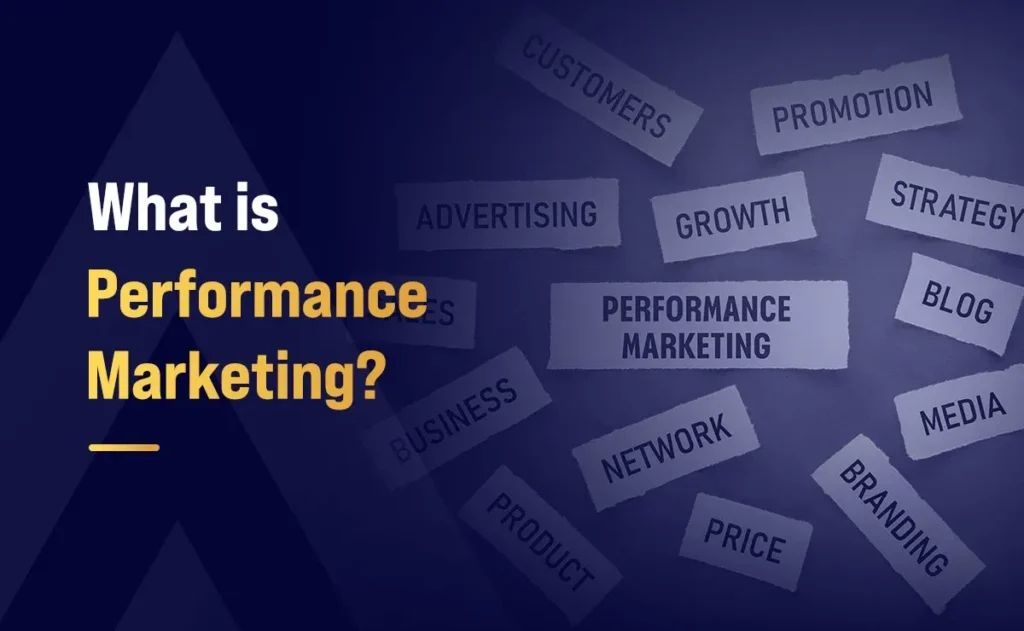
Performance marketing is a type of digital advertising in which advertisers are only charged when a measurable action, such as an online sale, search query, or lead form, is generated. These response types can be clicks, leads, app installs, sign-ups or closed sales. Rather than purchasing exposure based on a fixed cost-per-thousand impressions (i.e., CPM), advertisers pay only for the results of a sale, making performance marketing extremely cost-effective and scientific compared to periodic brand-building initiatives.
Performance marketing is, at the end of the day, about matching advertiser and publisher interests. Advertisers get what they want, and publishers or platforms are rewarded for providing it. This forms a performance-led ecosystem that tracks marketing spend from impact to business.
Performance marketing is also a frequent practice on online channels like search engines, social media, affiliate networks, and display advertising and with sources such as publishers who offer fixed-placement advertising.
How Performance Marketing Works
Performance marketing is dependent on tracking technology and analytics to gauge the performance of online ads. The procedure usually involves the following steps:
The Advertiser Defines a Goal
This might mean generating leads, getting more traffic to your website, making more online sales or driving app downloads.
- Marketing channels are selected
- Channels may be paid search, social media, affiliate, programmatic display.
- Campaigns are launched and tracked
Pixels, Cookies, and Attributions software are among the tracking tools that keep an eye on your user’s activity and result in conversions.
Results are Measured and Optimized
Advertisers review their performance data and tweak creatives, targeting, budgets to increase the outcome.
- Its compensation is performance-based.
- Advertisers pay only for completed action.
This feedback loop means that marketers can fine‑tune campaigns in realtime.
Key Performance Marketing Models
There are several pricing models performance marketing selects based on the campaign type:
Cost Per Click (CPC)
When a user clicks an ad, advertisers pay. You see this a lot in search engine marketing and with social media ads.
Cost Per Lead (CPL)
Money changes hands when a user fills out a form, subscribes to a newsletter, or shares contact details. This type is common in B2B marketing as well as the service industry.
Cost Per Acquisition (CPA)
Ad spending occurs only when there is a particular conversion, like a purchase or subscription. CPA is one of the most useful performance models and also has a widespread application.
Cost Per Thousand (CPT)
While CPM is impression-focused (not action-focused), it’s increasingly used in performance campaigns with great conversion tracking and optimization.
Commissions used to be more popular in affiliate marketing as a form of customer referral, whereby third parties would receive their share from the turnover or revenue.
Major Performance Marketing Channels
Performance marketing encompasses more than one digital channel with its inherent pros and cons.
Search Engine Marketing (SEM)
Search engine marketing is all about running ads on search platforms such as Google Ads or Bing Ads. These ads are triggered from a related keyword search, which means that often the audience that comes to your landing page has strong intent. SEM works great for demand capture and generating direct conversions.
Social Media Advertising
Facebook, Instagram, TikTok, LinkedIn and X (formerly Twitter) provide more advanced targeting options that can be based on demographics or interests or behavior. Social ads are highly effective for brand awareness, lead generation, and retargeting campaigns.
Affiliate Marketing
Performance marketing is built on an affiliate marketing foundation. Brands simply team up with affiliates who are promoting their product or service and they receive a payout on every sale/pre-qualified leads provided. This type allows organizations to grow without taking early risks.
Display and Programmatic Advertising
An ad that appears on a website, app or digital platform. In programmatic, the delivery of ads is automated and marketers bid in real time for placement based on performance data.
Influencer Performance Marketing
In contrast to traditional influencer marketing, performance-based influencer campaigns compensate creators for measurable results (clicks, sales etc.). This method is a mix of trust-based content with accountability.
Email Marketing and Retargeting
Email campaigns and retargeting ads target users who have already expressed interest in a brand. These tactics frequently achieve high conversion because there is already some degree of familiarity and intent.
Read Also : How To Create a YouTube Channel: A Complete Step-by-Step Guide for Beginners
Benefits of Performance Marketing
Performance marketing has a number of benefits compared with traditional approaches.
Measurable Results
The whole pay-for-performance industry can be tracked and analyzed. Marketers can also precisely measure how much they spend and what that money yields.
Cost Efficiency
Since advertisers only pay for performance, wasted ad spend is also reduced. If possible, assign budgets to the most performant channels.
Scalability
The winning formulas (or silver bullets) can be scaled with higher budgets, broader targeting and additional channels, with minimal incremental risk.
Real-Time Optimization
“Attractive Immediately” campaigns can use performance data to almost instantly make an adjustment. Ads that underperform are paused; investments in those overperformers are increased.
Strong ROI Focus
Performance marketing offers a high, measurable ROI, which has appeal to startups – as well as small and large business owners.
Challenges and Constraints of Performance Marketing
Despite the benefits, performance marketing is not without its drawbacks.
Attribution Complexity
The challenge of knowing which channel or touchpoint to credit for a conversion is not easy, particularly in multi-channel marketing.
Data Privacy and Tracking Limitations
Adjustments in data privacy laws and browsers clamping down on cookies risk hampering tracking precision and audience targeting.
Short-Term Focus
A fixation on short-term conversions can also lead to a loss in brand building.
Competition and Rising Costs
Ad costs can rise when more businesses are spending on performance marketing, especially in competitive sectors.
Meeting these challenges demands for a balanced approach: performance-driven tactics and brand marketing at large.
What is Performance Marketing? Best Ways to Use It
In order to make the most of performance marketing, companies need to apply fundamental principles that put strategy and data—along with user experience—first.
Set Clear and Realistic Goals
Define success before ever starting your campaign. Whether a target cost per acquisition, leads volume or revenue goal, clear goals help to direct optimization and decision-making.
Optimise Channel Selection for Your Audience
Not every channel is going to work for every business. B2Bs may see more traction on LinkedIn and Google Search, while B2Cs frequently kill it on Instagram, TikTok and Facebook.
Invest in High-Quality Creatives
High-quality visuals, persuasive copy and strong calls to action all do wonders for performance. Every creative, but not just one. Try a bunch of creatives to see what works best for your audience.
Use Data to Continuously Optimize
And track metrics such as CTR, conversion rate, CPA and LTV. II. Leverage this data to optimize targeting, messaging and bid strategies.
Leverage Retargeting and Funnel Strategies
Many users do not convert on the first touch. By using retargeting campaigns and multi-step funnels, the prospects can be nurtured and conversion rates can be increased over time.
Balance Automation with Human Insight
Automation tools and AI-driven bidding strategies optimize performance; but human intervention is still needed for strategy, creativity, and ethics.
Combine Performance Marketing and Brand Building
The best marketing strategies are a combination of performance tactics and brand storytelling. ” High brand awareness creates trust, reduces acquisition cost, and increases long-term value.
Performance Marketing vs Traditional Marketing
Traditional marketing is all about exposure and reach—think television, radio, and print. Good for the brand, but with less accurate measurement.
Performance marketing, in contrast, is all about accountability and statistical results. Companies no longer need to speculate and estimate on the impact of marketing spend—they can tie it directly to results instead. But these two techniques do not have to be mutually exclusive. Branded marketing and performance marketing often work best when the two are combined.
The Future of Performance Marketing
Like the tech and consumer behaviors it is rooted in, performance marketing has evolved. Targeting and optimization are being enhanced by artificial intelligence, machine learning and advanced analytics. Meanwhile, privacy-first approaches and first-party data are growing more important.
Brands that respond to these changes by refocusing on value and trust will continue to be competitive in a performance-based world.
Conclusion
According to picktechinnovations, Performance marketing has revolutionized the world of advertising and how businesses market their services. With its emphasis on measurable performance, cost-efficiency and data-driven optimisation Adblue ensures that brands can scale with confidence and assimilate evidential value. But ultimately, great performance is about more than just counting the conversions — it’s about having the right strategy and combination of tactics that leverage strategic thinking, effective creativity and a mix of hard-edge performance and brand value.
When performance marketing is put to good use, it is much more than a tactic — it becomes an engine driving sustainable business growth.